As an Amazon Associate I earn from qualifying purchases.
Ray-Ban Meta Wayfarer Gen 1 Review: Still Worth Buying in 2026?
Quick Verdict
The Ray-Ban Meta Wayfarer Gen 1 remains a practical choice for people who want stylish glasses with a hands-free camera, open-ear audio, calling, messaging, and Meta AI features.
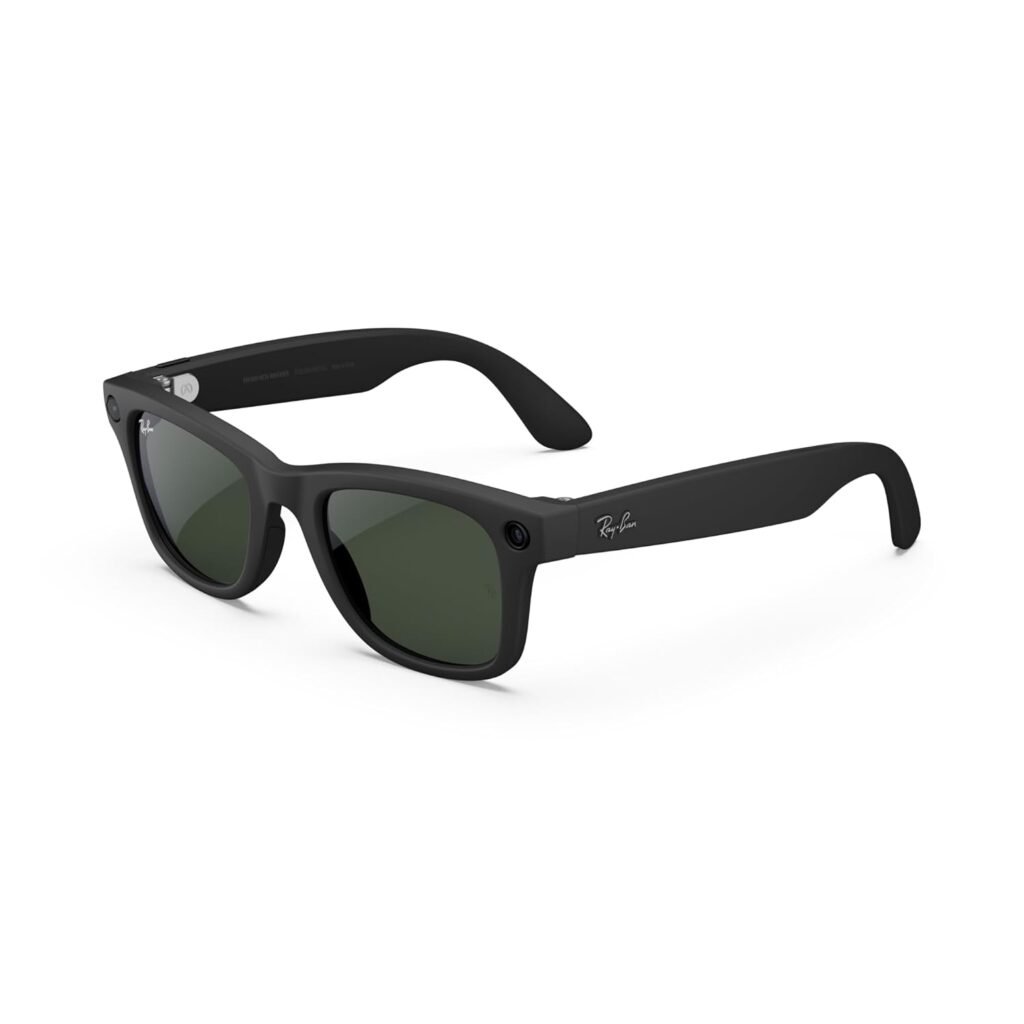
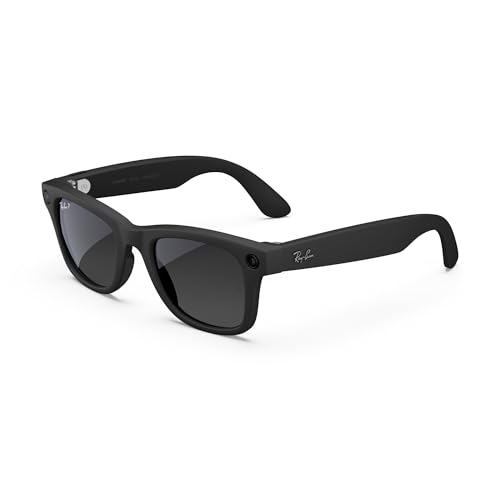
This particular Amazon version combines a matte-black Wayfarer frame with non-polarized Transitions lenses that shift from clear to graphite green. It is especially useful for commuting, casual travel, walking, events, and capturing quick first-person clips without reaching for a phone.
Its main weakness is battery life. The glasses are rated for up to four hours, compared with up to eight hours on Ray-Ban Meta Gen 2. Gen 2 also raises maximum video quality from 1080p+ to 3K, so the older model only makes strong buying sense when its current price is meaningfully lower.
SmartView HQ verdict: A smart value purchase for casual creators and everyday users when discounted, but Gen 2 is the better long-term choice for frequent filming and all-day wear.
Editorial assessment: 4.0/5, pending hands-on verification.

- #1 SELLING AI GLASSES – Move effortlessly through life with Ray-Ban Meta glasses. Capture photos and videos, listen to m…
- CAPTURE WHAT YOU SEE AND HEAR HANDS-FREE – Capture exactly what you see and hear with an ultra-wide 12 MP camera and a f…
- LISTEN WITH OPEN-EAR AUDIO — Listen to music and more with discreet open-ear speakers that deliver rich, quality audio w…
Who Is the Ray-Ban Meta Gen 1 Best For?
The Ray-Ban Meta Wayfarer Gen 1 is best suited to:
- Travelers who want to capture short, first-person clips without holding a phone
- Parents, pet owners, and event attendees who want spontaneous hands-free photos
- Creators producing casual vertical videos, Reels, Shorts, or behind-the-scenes footage
- Commuters who listen to podcasts or take calls while remaining aware of their surroundings
- Buyers who prefer recognizable Ray-Ban styling over a visibly futuristic wearable
- People who want clear lenses indoors and darker lenses outdoors in one frame
Who Should Skip It?
Consider another option when:
- You need reliable all-day battery life without returning the glasses to their case
- You regularly record long or high-resolution videos
- You want noise cancellation or strong bass for music
- You are uncomfortable using a Meta account or granting app permissions
- You want an in-lens display, navigation overlay, or augmented-reality interface
- The Gen 1 price is close to the price of Gen 2
- You need fully waterproof sports glasses
These are smart audio and camera glasses, not a traditional augmented-reality headset. There is no visual display projected inside the lenses.
Ray-Ban Meta Wayfarer Gen 1 Specifications
| Specification | Details |
| Model generation | Ray-Ban Meta Gen 1 |
| Amazon ASIN | B0DD65YPJV |
| Frame style | Wayfarer |
| Frame finish | Matte black |
| Lens type | Transitions clear-to-graphite-green |
| Polarization | Non-polarized |
| Camera | 12MP ultra-wide |
| Field of view | 100 degrees |
| Maximum listed video quality | 1080p+ |
| Microphones | Five-microphone system |
| Audio | Open-ear directional speakers |
| Battery life | Up to four hours |
| Charging case | Up to approximately 32 additional hours |
| Water resistance | IPX4 sweat and splash resistance |
| Controls | Voice commands, capture button, and touchpad |
| Connectivity | Bluetooth and Wi-Fi through a compatible smartphone |
| App requirement | Meta AI mobile app |
| Account requirement | Valid Meta account |
| Phone compatibility | Android 10 or later; iOS 14.4 or later, subject to current support |
| Frame measurements | 50mm lens, 22mm bridge, 150mm temple |
| Included items shown by Amazon | Charging case and cleaning cloth |
The Amazon listing identifies this exact model as the Gen 1 matte-black Wayfarer with clear-to-graphite-green Transitions lenses. It lists a 50-22-150 standard frame and non-polarized polycarbonate lenses.
Ray-Ban states that operation requires a compatible smartphone, wireless internet, the Meta AI app, and a valid Meta account. Supported features can vary by region, language, phone, and software version.
Design and Everyday Comfort
The strongest part of the Ray-Ban Meta concept is that the product still looks like a recognizable pair of Wayfarers.
The arms are thicker than standard Ray-Ban temples because they contain the speakers, microphones, battery, touch controls, and processing hardware. Even so, the overall appearance is much less conspicuous than many earlier smart-glasses designs.
Independent testing by The Verge praised the styling and the wide selection of frame and lens options, describing the glasses as practical enough to wear across different everyday situations. The review also noted that the thicker arms are a necessary trade-off for the built-in electronics.
Transitions Lenses Add Real Versatility
This version uses photochromic lenses that appear clearer indoors and darken outdoors in response to ultraviolet light.
That makes the model more flexible than a sunglasses-only configuration. You can wear it in an office, café, store, airport, or shaded environment without immediately needing a second pair of glasses.
However, buyers should verify how dark this exact lens becomes in their typical environment. Photochromic lenses may behave differently behind car windshields because many windshields filter the ultraviolet light that activates the tint.
Also note that the Amazon listing describes these lenses as non-polarized. Buyers who prioritize glare reduction for driving, fishing, or strong reflective sunlight may prefer a polarized configuration.
Camera Quality and Hands-Free Recording
The 12MP ultra-wide camera is the feature that separates Ray-Ban Meta from audio-only smart glasses.
It captures from approximately the wearer’s point of view, making it useful for:
- Travel clips
- Walking tours
- Cooking demonstrations
- Unboxings
- Events and family moments
- Pet videos
- Behind-the-scenes creator footage
- Video calls where the other person needs to see what you see
You can start a recording through the physical capture button or supported voice commands. The five-microphone array records surrounding audio and supports calls, messages, video, and AI interactions.
The camera is convenient rather than cinematic. The first-generation model tops out at 1080p+ video, whereas Gen 2 supports up to 3K recording. The older version is therefore better for spontaneous social footage than for detailed production work.
The Verge found that the Gen 1 camera represented a meaningful improvement over earlier smart glasses, with 3024 × 4032 photos and 1080p video at 30 frames per second. It also found importing captured media straightforward.
Is It Good for Content Creators?
Yes, with realistic expectations.
The first-person angle can make videos feel more immediate and natural. It is particularly useful when both hands are occupied, such as while assembling equipment, cooking, walking through a destination, or demonstrating a product.
However, it should be treated as a secondary creator camera rather than a replacement for a phone, action camera, mirrorless camera, or dedicated microphone.
Vertical framing, battery limitations, variable lighting, and the lack of a live composition screen mean some shots may not be framed exactly as expected.
Open-Ear Audio and Calling
The built-in speakers direct sound toward your ears without sealing the ear canal.
This is helpful when walking, commuting, traveling, or working around other people because you can hear music, podcasts, calls, and navigation prompts while retaining more environmental awareness than you would with closed earbuds.
Ray-Ban says the glasses can switch between media, calls, and surrounding sound, while the microphone array supports hands-free communication.
Third-party testing found that call quality was a notable strength. The Verge also reported improved loudness, bass, audio leakage, and microphone performance compared with the previous Ray-Ban Stories generation.
The limitation is that open-ear speakers cannot create the same isolation or low-end impact as well-fitting earbuds or over-ear headphones. In noisy public spaces, you may need to raise the volume, which can reduce privacy and increase sound leakage.
For podcasts, voice calls, directions, and casual listening, the audio system is practical. For flights, focused work, or bass-heavy music, dedicated headphones remain better.
Meta AI and Voice Controls
Meta AI expands the glasses beyond simple audio playback and recording.
Depending on region, language, app version, and account eligibility, supported functions may include:
- Asking questions about objects or places
- Translating visible text or conversations
- Capturing photos or videos by voice
- Calling or messaging contacts
- Controlling music
- Identifying landmarks
- Scanning QR codes
- Asking for reminders or contextual information
Ray-Ban describes Meta AI as capable of responding to questions about what the wearer sees, translating signs, scanning QR codes, and assisting with everyday tasks. The Meta AI app is required for setup, media imports, software updates, and settings management.
These features should be treated as convenient assistance, not unquestionable authority. AI responses can be incomplete or inaccurate, particularly when interpreting unclear scenes, signs, locations, or specialized information.
Do not rely on the glasses alone for medical, legal, financial, safety-critical, or emergency decisions.
Battery Life: The Main Gen 1 Limitation
Ray-Ban rates the Gen 1 glasses for up to four hours of use. Amazon’s current comparison information lists up to 32 additional hours through the charging case. Actual runtime will vary according to recording, calls, music volume, AI use, temperature, signal conditions, and battery age.
Four hours may be enough for:
- A commute
- A walk or short tour
- A casual event
- Intermittent photos and calls
- A focused recording session
It is less suitable for continuous morning-to-evening wear.
Frequent video capture and audio streaming will use the battery faster than occasional voice commands and photos. The charging case helps, but the glasses must be removed and placed inside it to recharge.
Gen 2 is the clear winner for battery-sensitive buyers. Meta rates it for up to eight hours of typical use, approximately double the Gen 1 rating, with up to 48 additional hours from the case.
Privacy and Social Comfort
The front-mounted camera creates an unavoidable privacy consideration.
The glasses include a visible capture indicator intended to show when photos or videos are being recorded. Even so, people nearby may not immediately recognize the device or notice the indicator.
The Verge reported that bystanders often did not notice when its reviewer recorded in public and argued that society lacks the clear social cues associated with holding up a phone camera.
Responsible use means:
- Asking permission before recording private conversations or events
- Avoiding recording in bathrooms, changing areas, medical settings, classrooms, or other sensitive spaces
- Respecting venue policies
- Checking applicable consent and recording laws
- Clearly explaining the glasses when people appear uncomfortable
- Reviewing Meta’s current privacy and voice-data settings
The glasses also require a Meta account and companion app. Setup may request access to Bluetooth, Wi-Fi, location, contacts, camera-related media, and voice features depending on which functions you enable.
Buyers who are uncomfortable with cloud-connected AI, wearable cameras, or Meta’s account ecosystem should consider audio-only glasses or standard eyewear instead.
Water Resistance and Durability
Amazon lists the Ray-Ban Meta Gen 1 as IPX4 sweat and splash resistant. That should provide protection from light rain, sweat, and incidental splashes, but it does not make the glasses suitable for swimming, showering, or submersion.
Treat them as electronics:
- Do not rinse them under a tap
- Do not wear them in a pool
- Keep the charging contacts dry
- Dry the frame before placing it inside the case
- Avoid leaving the glasses in a very hot vehicle
- Use the included case during transport
The Transitions lenses and frame may also require normal eyewear care. Use an approved microfiber cloth and avoid harsh household cleaners unless Ray-Ban explicitly states they are safe.
Real-World Use Cases
Travel and City Exploration
The hands-free camera is useful when walking through markets, landmarks, museums that permit photography, and outdoor destinations. Meta AI may also assist with signs, landmarks, and translation in supported regions.
The four-hour battery is the main constraint. Travelers should carry the charging case and keep a phone available for maps, tickets, emergencies, and accuracy checks.
Remote Work and Calls
The glasses can handle short calls, voice messages, and casual meetings while leaving the ears open. They may be convenient when moving around a home office.
They are less suitable for confidential meetings in shared environments because open-ear sound can leak and nearby speech may be captured by the microphones.
Everyday Content Creation
Creators can capture natural first-person video while keeping their hands free. This can work well for short-form social content, demonstrations, travel clips, and behind-the-scenes footage.
For polished production, use the Ray-Ban Meta as a supplementary angle and record important audio separately.
Commuting and Walking
Open-ear audio helps the wearer remain more aware of traffic, announcements, and surrounding people than sealed headphones. Awareness is not guaranteed, however, and volume should remain low enough to hear hazards.
Pros and Cons
| Pros | Cons |
| Familiar Wayfarer design | Up to four hours of battery life |
| Useful hands-free 12MP camera | Video quality trails Gen 2 |
| Clear-to-dark Transitions lenses | Non-polarized lens configuration |
| Good for calls, podcasts, and voice messages | Open-ear audio lacks strong isolation |
| Five-microphone system | Requires Meta account and companion app |
| Charging case extends usable time | No in-lens display or AR overlay |
| Voice and touch controls | Privacy concerns around face-mounted cameras |
| IPX4 sweat and splash resistance | Not designed for swimming or heavy rain |
| Useful for POV travel and creator footage | AI accuracy and feature access can vary |
Ray-Ban Meta Gen 1 vs Gen 2: The Upgrade Question
| Feature | Ray-Ban Meta Gen 1 | Ray-Ban Meta Gen 2 |
| Camera | 12MP ultra-wide | 12MP ultra-wide |
| Field of view | 100 degrees | 100 degrees |
| Maximum listed video | 1080p+ | Up to 3K |
| Battery life | Up to 4 hours | Up to 8 hours |
| Charging-case capacity | Up to 32 additional hours | Up to 48 additional hours |
| Open-ear audio | Yes | Yes |
| Meta AI | Yes | Yes |
| IP rating | IPX4 | IPX4 |
| Best reason to buy | Lower-price opportunity | Better battery and video |
The two generations share the central experience: Ray-Ban styling, a 12MP camera, open-ear speakers, hands-free communication, and Meta AI.
The Gen 2 improvements matter most to frequent creators and all-day users. It doubles the stated glasses battery life and raises video capture to 3K.
Buy Gen 1 When:
- Its verified price is substantially below Gen 2
- You mainly take photos and short videos
- You only need a few hours between charges
- The Transitions configuration matches your daily routine
- You want to test the smart-glasses category at a lower entry cost
Buy Gen 2 When:
- You want the better long-term purchase
- You record video regularly
- You expect to wear the glasses for most of the day
- You travel frequently
- The price difference is relatively small
Alternatives to Consider
1. Ray-Ban Meta Wayfarer Gen 2
The most direct upgrade. Choose Gen 2 for up to eight hours of battery life, up to 3K video, and a charging case rated for up to 48 additional hours.
Best for: Frequent creators, travelers, and buyers planning to use smart glasses daily.
2. Ray-Ban Meta Gen 1 With Polarized Lenses
Choose a polarized Gen 1 variant when glare reduction matters more than indoor-to-outdoor lens flexibility.
Best for: Driving, bright outdoor environments, and reflective surfaces.
Confirm the exact frame size, color, generation, and lens type before purchasing because Amazon listings may group several configurations together.
3. Standard Ray-Ban Wayfarer Plus Wireless Earbuds
This combination removes the camera, Meta account requirement, and smart-glasses battery limitation while providing stronger audio isolation.
Best for: Privacy-conscious buyers and people who mainly want music or calls rather than hands-free recording.
Final Verdict: Are Ray-Ban Meta Gen 1 Glasses Worth It?
The Ray-Ban Meta Wayfarer Gen 1 is still useful in 2026, but its value now depends heavily on price.
Its greatest strengths are not any single technical specification. The appeal comes from combining several practical tools in a frame people may genuinely wear: a hands-free camera, open-ear speakers, capable microphones, voice controls, Transitions lenses, and recognizable Wayfarer styling.
The product is particularly compelling for casual creators, travelers, commuters, parents, and tech enthusiasts who want to capture moments without constantly reaching for a phone.
The four-hour battery and 1080p+ video ceiling are now its biggest disadvantages. Buyers who expect heavy camera use or all-day wear should move to Gen 2.
Buy the Ray-Ban Meta Gen 1 when the verified Amazon price gives it a clear value advantage. Choose Gen 2 when the difference is small enough that longer battery life and better video justify the upgrade.
Frequently Asked Questions
Does the Ray-Ban Meta Wayfarer Gen 1 have a display?
No. The lenses do not show notifications, maps, video, or augmented-reality graphics. Information and AI responses are delivered primarily through audio.
How long does the Ray-Ban Meta Gen 1 battery last?
The official rating is up to four hours, depending on usage. Video recording, calls, music playback, AI requests, temperature, and battery age can reduce runtime. The charging case provides additional recharges.
Does this model have Transitions lenses?
Yes. The linked Amazon model is listed with clear-to-graphite-green Transitions lenses. It is also described as non-polarized.
Can Ray-Ban Meta glasses record video?
Yes. The Gen 1 model includes a 12MP ultra-wide camera and supports 1080p+ video recording. Gen 2 increases maximum listed recording quality to 3K.
Can you listen to music through Ray-Ban Meta glasses?
Yes. The temples contain open-ear speakers for music, podcasts, calls, and AI responses. They let in surrounding sound but do not provide the isolation of noise-canceling headphones.
Do Ray-Ban Meta glasses require a phone?
A compatible smartphone is required for setup and the complete experience. Ray-Ban lists Android 10 or later and iOS 14.4 or later, along with wireless internet, the Meta AI app, and a valid Meta account. Compatibility should be checked again before publishing or purchasing.
Are Ray-Ban Meta glasses waterproof?
No. Gen 1 is rated IPX4 for sweat and splash resistance. It should not be submerged or used for swimming.
Is Ray-Ban Meta Gen 1 better than Gen 2?
Gen 1 may offer better value when heavily discounted. Gen 2 is technically better because it provides up to twice the rated glasses battery life and up to 3K video recording.
Can prescription lenses be added?
Ray-Ban sells prescription-compatible configurations, but eligibility depends on the model, prescription range, country, and seller. Verify that the exact Amazon listing supports prescription ordering or ask an authorized optical provider before replacing the lenses.